 والي التقطيع
As the recycled metal industry places increasingly higher demands on material pretreatment, the shredding of light scrap metal has gained growing attention. Scrap metal materials such as iron chips, steel drums, beverage cans, كوابل, and printers—varying in shape, high in toughness, and strong in ductility—pose greater challenges to shredding equipment.
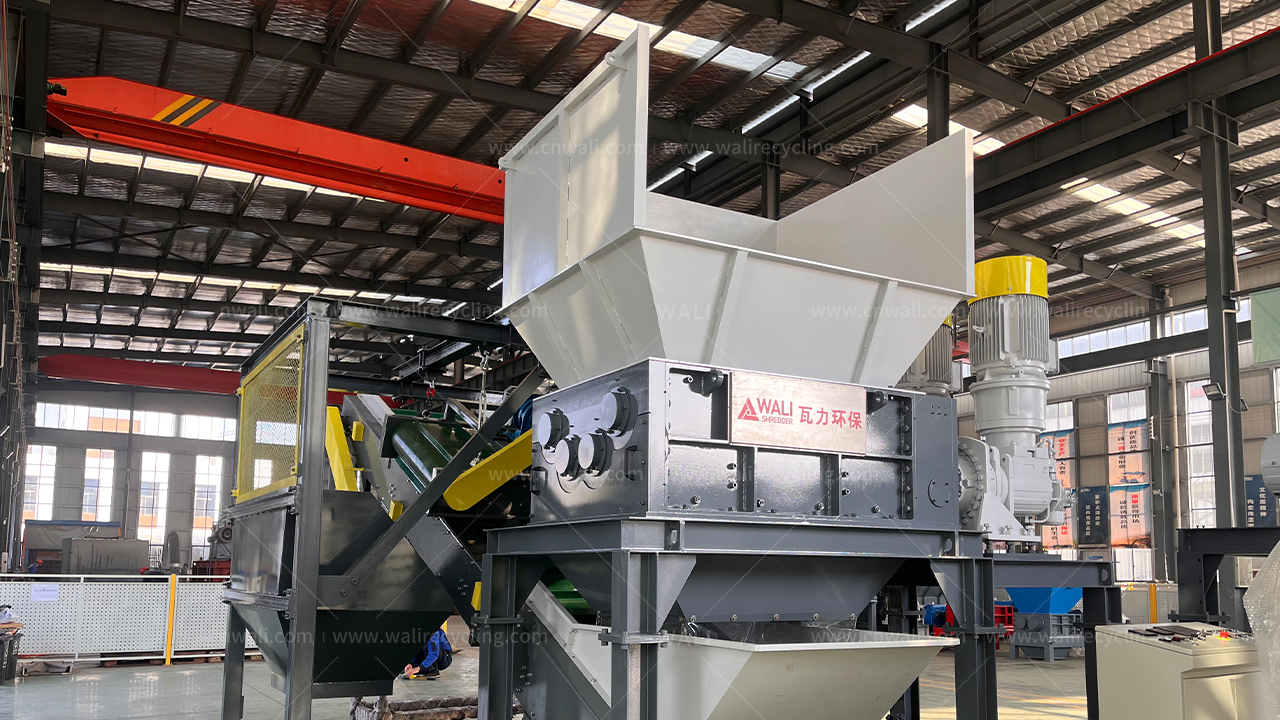
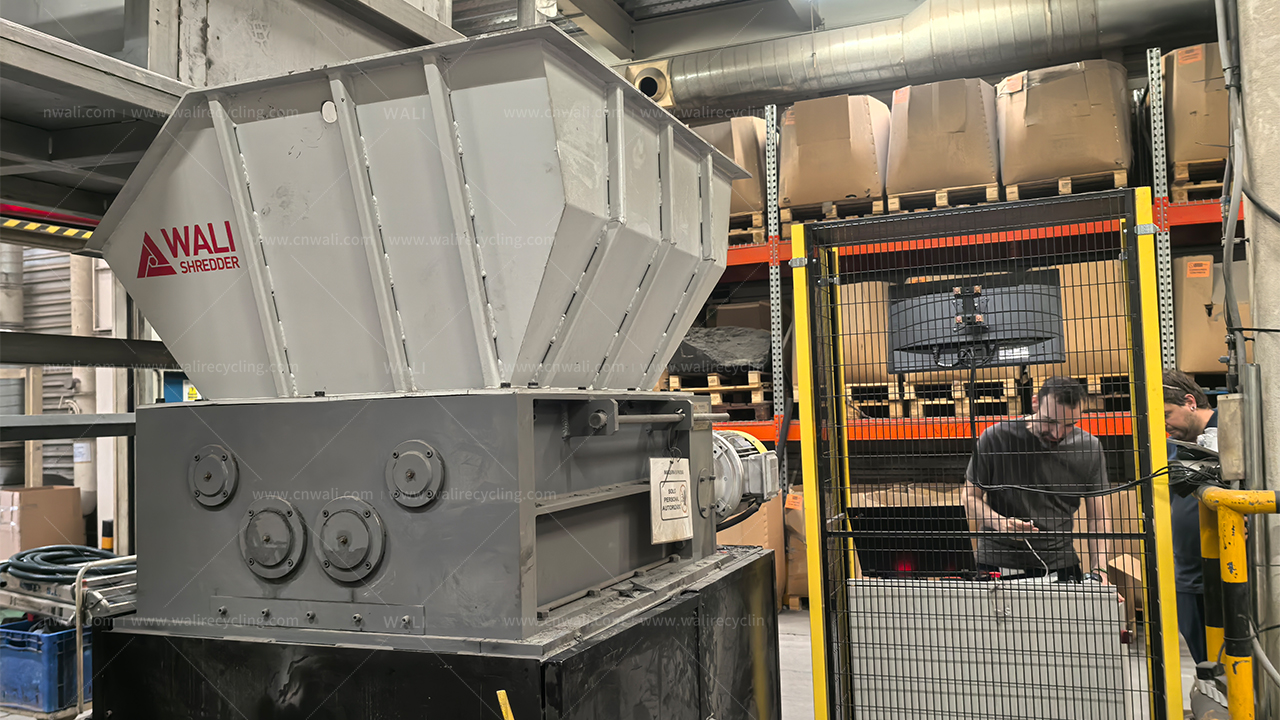
Wali’s Four-Shaft Shear Shredder is a professional solution specifically designed for such materials, providing an efficient and reliable pretreatment solution for scrap metal recycling.
What Are the Pain Points in Shredding Light Scrap Metal?
In actual scrap metal recycling operations, the shredding of light materials has long faced a number of persistent problems. These issues not only affect production efficiency but also directly impact the economic returns of recycling businesses.
1. Tangling and Build-Up, Frequent Shutdowns
Materials such as cables, fine iron chips, and beverage cans easily become tangled around the cutter shaft in conventional shredders—the more they run, the tighter they wrap and the more they accumulate. The equipment has to be shut down for cleaning after only a short period of operation, with each cleaning often taking several hours and completely disrupting production schedules.
2. Uneven Output, Oversized Particles
Many shredders cannot effectively control output particle size, resulting in unevenly sized materials after shredding—large pieces remain too big to enter downstream sorting or melting processes, while fine particles are easily over-shredded, generating excessive dust and causing metal loss. Uneven output directly affects the efficiency of subsequent magnetic separation and sorting, as well as the overall metal recovery rate.
3. Rapid Blade Wear, Frequent Replacements
Metallic materials are hard and tough, causing severe wear on blades. Blades made from ordinary materials experience significantly shortened service life when continuously processing steel drums, motor casings, and similar materials. Frequent blade replacements not only increase costs but also result in substantial downtime.
4. Heavy Dust, Easy Ingress into Shaft Ends
The shredding process generates large amounts of metal dust. Traditional equipment often lacks adequate bearing sealing performance, allowing dust to easily penetrate the bearing interiors, accelerating bearing wear, leading to premature equipment failure, and keeping maintenance costs high.
5. Low Throughput, High Energy Consumption
When dealing with light materials and hollow framed objects (such as steel drums and printer casings), conventional equipment struggles to take in material efficiently, resulting in long no-load running times, low throughput, high electricity bills, and continuously rising shredding costs per ton.
These are exactly the pain points that Wali’s Four-Shaft Shear Shredder is designed to solve.
Four-Shaft Shear Shredding: More Than Just "Shredding"
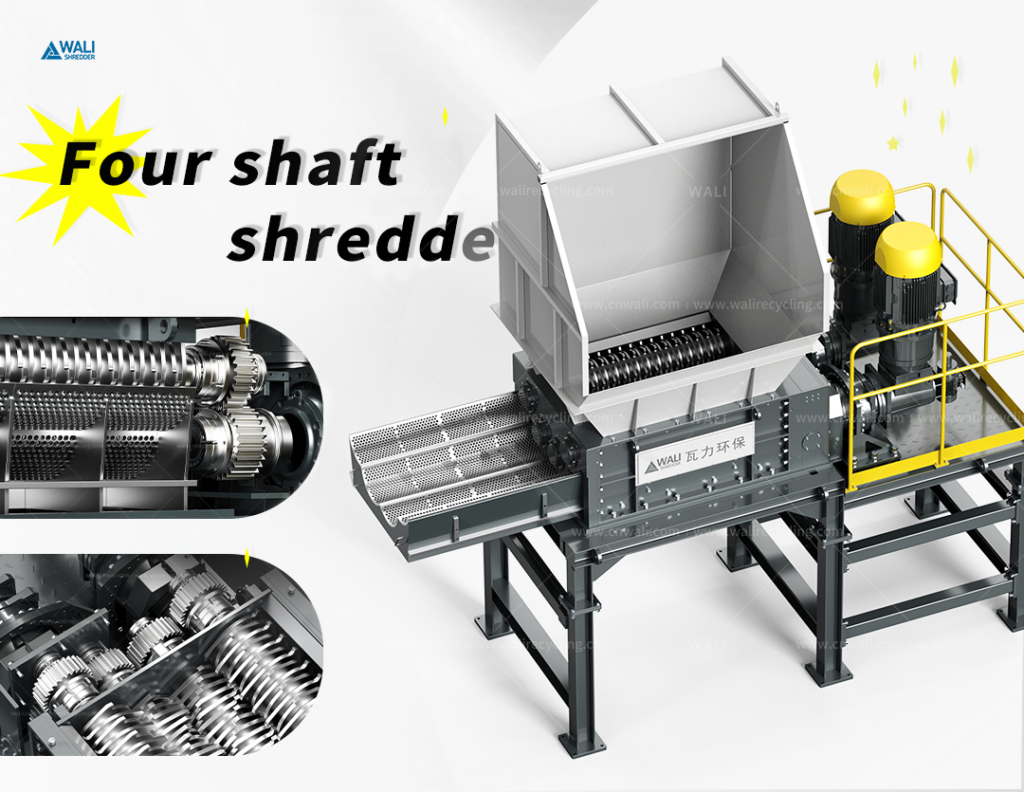
The Four-Shaft Shear Shredder uses the combined shearing, tearing, and squeezing forces of cutters on four sets of cutter shafts to uniformly shred material into fine particles. Compared to conventional shredders, the four-shaft shredder delivers greater shearing force without the need for additional auxiliary pressing mechanisms, making it better suited for processing various tough and ductile metal scraps.
It can operate as a stand-alone unit, independently completing shredding tasks, or serve as a critical component of a complete recycling production line, providing qualified feedstock for subsequent magnetic separation, sorting, and other processes.
Three Core Technologies That Tackle the Pain Points Head-On
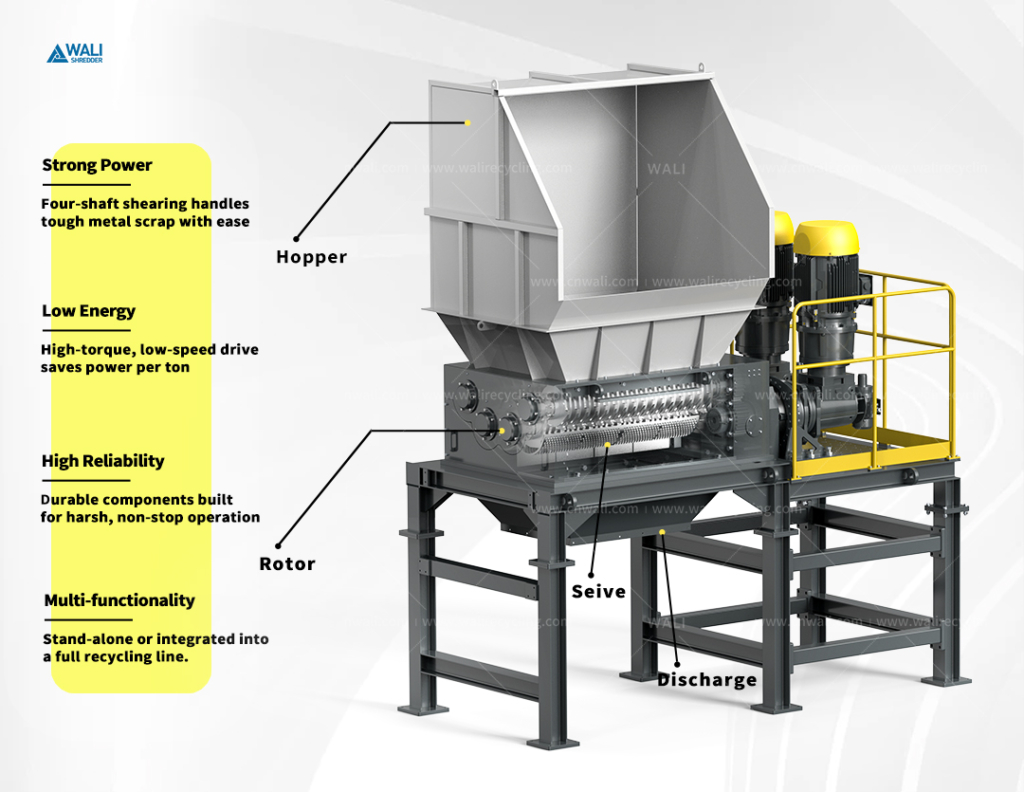
Core Technology 1: Self-Cleaning High-Position Blades – Eliminating Tangling and Build-Up
This is the signature design that sets the four-shaft shredder apart from other equipment.
In the four-shaft arrangement, high-position blades and low-position blades are staggered. During operation, the high-position blades continuously “scrape” and clean the low-position blades, automatically removing any cables, iron chips, or other materials that may have become tangled around them.
- This means:
No frequent shutdowns for cleaning cutter shafts – significantly extended continuous operation time
Greatly reduced manual intervention – lowering operator labor intensity
Significantly improved production efficiency – saying goodbye to the “one hour shredding, two hours cleaning” dilemma
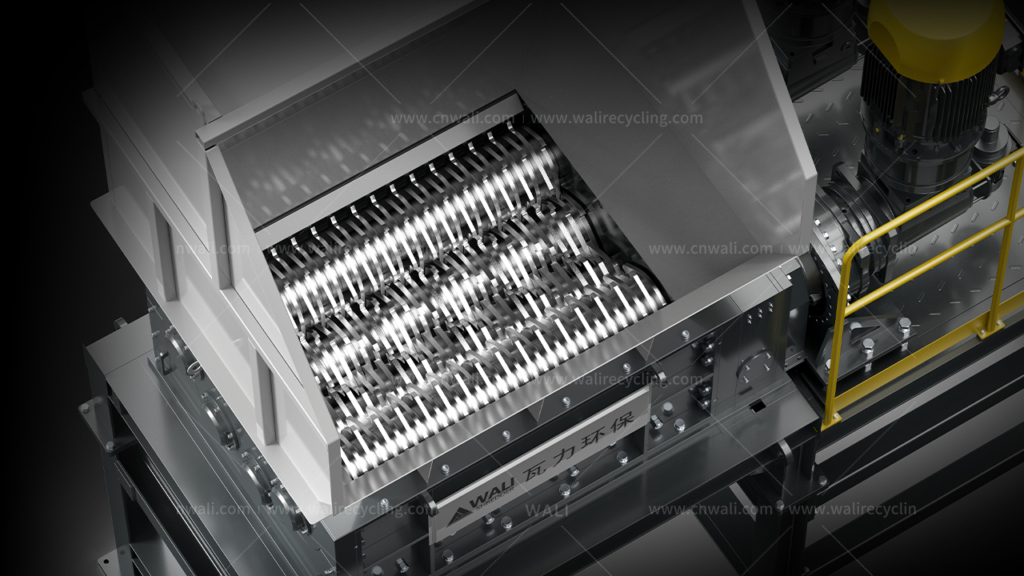
Core Technology 2: Pull-Out Screen – Uniform Output with Controllable Particle Size
The screen is the key to the four-shaft shredder’s “precise output” capability.
أنا. A movable, removable screen is installed beneath the shredding chamber. Material is sheared repeatedly within the chamber and can only be discharged when its size is smaller than the screen openings. Large pieces cannot “sneak through” and must undergo secondary and tertiary shredding until they meet the required size.
ثانيا. Uniform and controllable output particle size – meeting the strict size requirements of downstream magnetic separation, sorting, and melting processes
ثالثا. Flexible screen replacement – choose different aperture sizes based on end-use needs – one machine adapts to various output requirements
رابعا. Pull-out structure for easy maintenance – no complex disassembly, significantly reducing screen changeover time
V. Improved metal recovery rate – uniform output particle size enables more efficient magnetic separation and sorting, with less metal loss machine operation
Core Technology 3: More Heavy-Duty Configurations for Long-Term Stable Operation
√Imported high-alloy steel blades – wear-resistant and durable, with long service life and easy installation and maintenance
√42CrMo high-alloy steel main shaft – high mechanical strength and impact resistance, capable of withstanding high loads in metal shredding
√Motor + planetary gearbox drive – low speed, high torque, high shredding efficiency with energy savings
√Spherical roller bearings + quadruple sealing – effective dust and moisture protection, suitable for the dusty and complex industrial environment of metal shredding
√Overload protection with auto-reverse – cutters automatically reverse to protect the machine in case of motor overload or material jamming
√PLC intelligent control system – real-time monitoring, alarms, remote analysis, and data analytics – fully automated
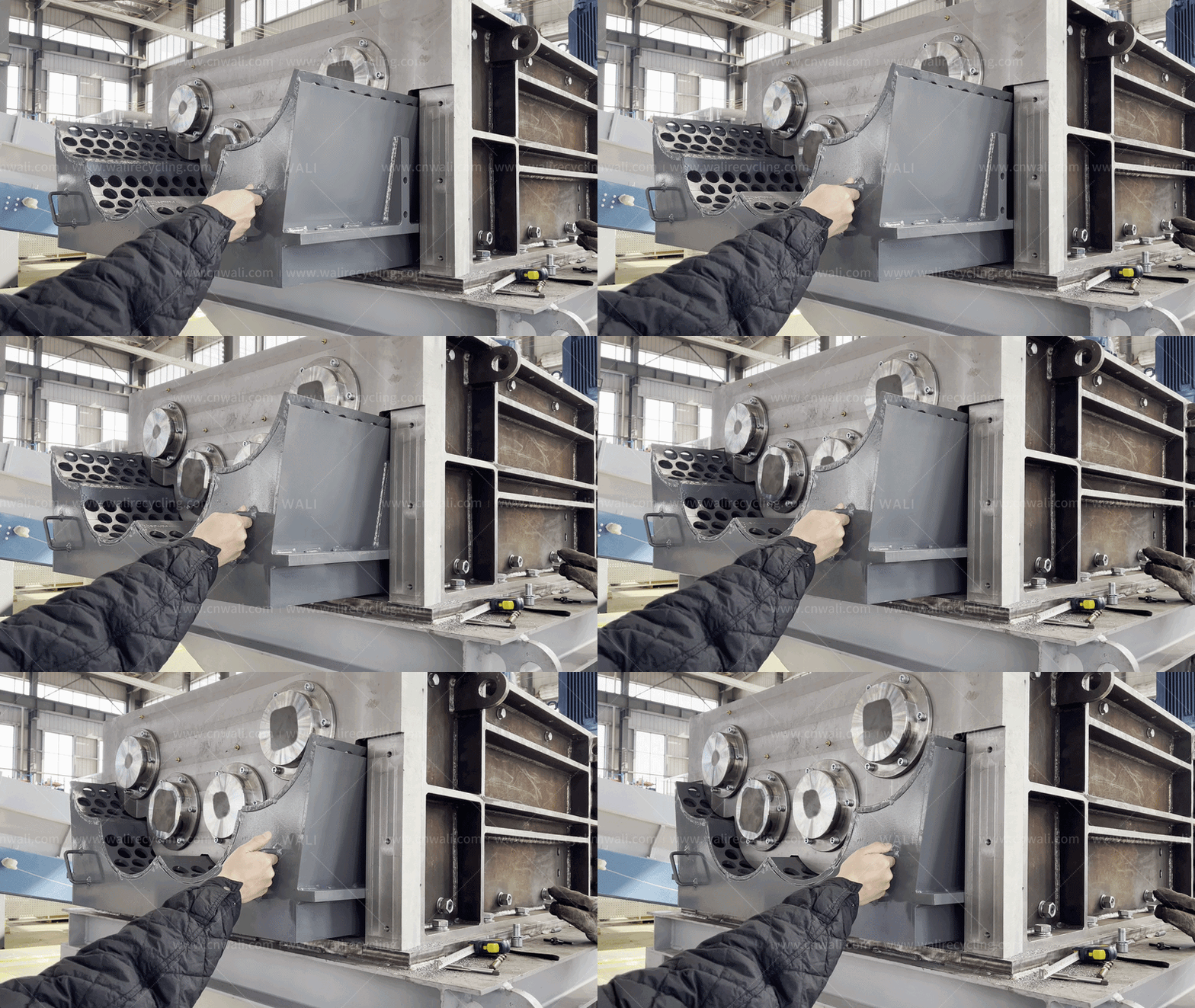
From Shredding to Recovery: Wali Metal Shredding & Recovery Production System
The four-shaft shredder solves the “تمزيق” problem, but shredding is never the goal itself—it is a means to better recovery. Whether the shredded material can be efficiently separated into pure metals is the key factor determining ultimate economic returns.
This is where the value of Wali’s Metal Shredding & Recovery Production System lies—starting with the four-shaft shredder, it builds a complete chain from “تمزيق” ل “separation” ل “purification.”
>>> Why Is Further Processing Needed After Shredding?
The four-shaft shredder reduces metal materials to uniform particles, but at this stage, metals and non-metals (such as paint coatings, plastic layers, مطاط, إلخ.) are still bonded together. Shredding only breaks open the material’s “shell”—the true value release comes from subsequent hammering separation and magnetic purification.
Only by fully liberating metals from non-metals can high-purity metal products be obtained through magnetic separation or eddy current separation, commanding better market prices.
>> Standard Process Flow
◊ Metal-containing materials are fed via a chain plate conveyor into the four-shaft shredder for primary shredding—this step addresses the “breaking large pieces into small pieces, turning mixed materials into uniform ones” challenge, providing uniformly sized feedstock for subsequent processing.
◊ The shredded material then enters a hammer crusher, where high-speed impacting further separates metals from non-metals—this step addresses the “liberating metals from impurities” challenge, using powerful impact to completely detach metals from paint, بلاستيك, مطاط, and other adhered materials.
◊ Finally, a magnetic drum separator separates ferrous materials from non-ferrous materials, yielding pure ferrous metal—this step addresses the “picking out iron from the mixture” challenge, achieving final purification and recovery.
◊ After shredding, the material volume is significantly reduced and the shape is more regular, providing great convenience for subsequent conveying, magnetic separation, loading, and melting utilization.
>> Extended Configurations
In addition to ferrous metals, the system can also be equipped with eddy current separators and other equipment based on customer requirements to separate non-ferrous metals such as copper and aluminum, achieving high-purity recovery of multiple metals and further increasing recycling value.
>>> The Logical Closed Loop of the Entire System
◊ Looking back, the entire production system forms a clear logical chain:
◊ Four-Shaft Shredder (uniform shredding) → Hammer Crusher (liberation & separation) → Magnetic Separation/Eddy Current (purification & recovery)
◊ Upstream equipment creates optimal operating conditions for downstream equipment—the four-shaft shredder provides uniform output particle size, allowing the hammer crusher to more fully liberate metals from non-metals; the hammer crusher completely opens up the material, enabling the magnetic separator to accurately pick out every piece of metal. Each link is interconnected and indispensable.
◊ The entire system can be custom-designed and integrated based on material characteristics, capacity requirements, and end-product specifications, ensuring that every production line achieves optimal resource recovery output and economic returns.