TEL: +86-177 3033 8505 EMAIL: info@cnwali.com
Contatto |
 Trituratore Guardiano
Hammer Mill
The hammer crusher operates on the principle of impact crushing, designed to reduce the volume of hard materials and, through the hammering action, separate impurities adhering to metal surfaces from the base material, thereby obtaining a high-density, high-purity recycled product.
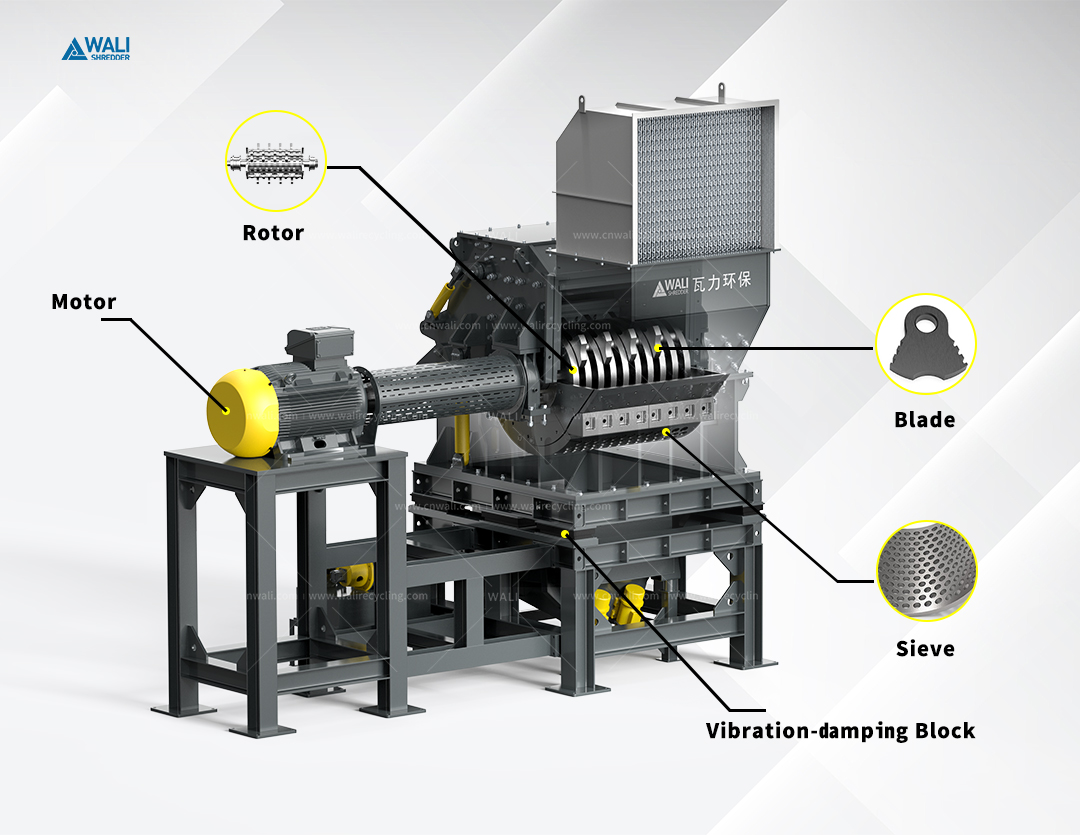
Its core working component is a rotor equipped with hammers, consisting of a main shaft, discs, shaft pins, and hammers. Driven by an electric motor, the rotor rotates at high speed within the crushing chamber. Materials entering the chamber are crushed by the high-speed hammering, impact, and grinding actions. Particles smaller than the screen openings are discharged through the screen beneath the rotor.
The equipment is widely used in the recycling and processing of scrap metals and electronic waste, including lithium batteries, small transformers, micro motors, scrap aluminum, scrap iron, Radiatori, tinplate, and brass-copper mixtures.
Yet we have never ceased refining it.
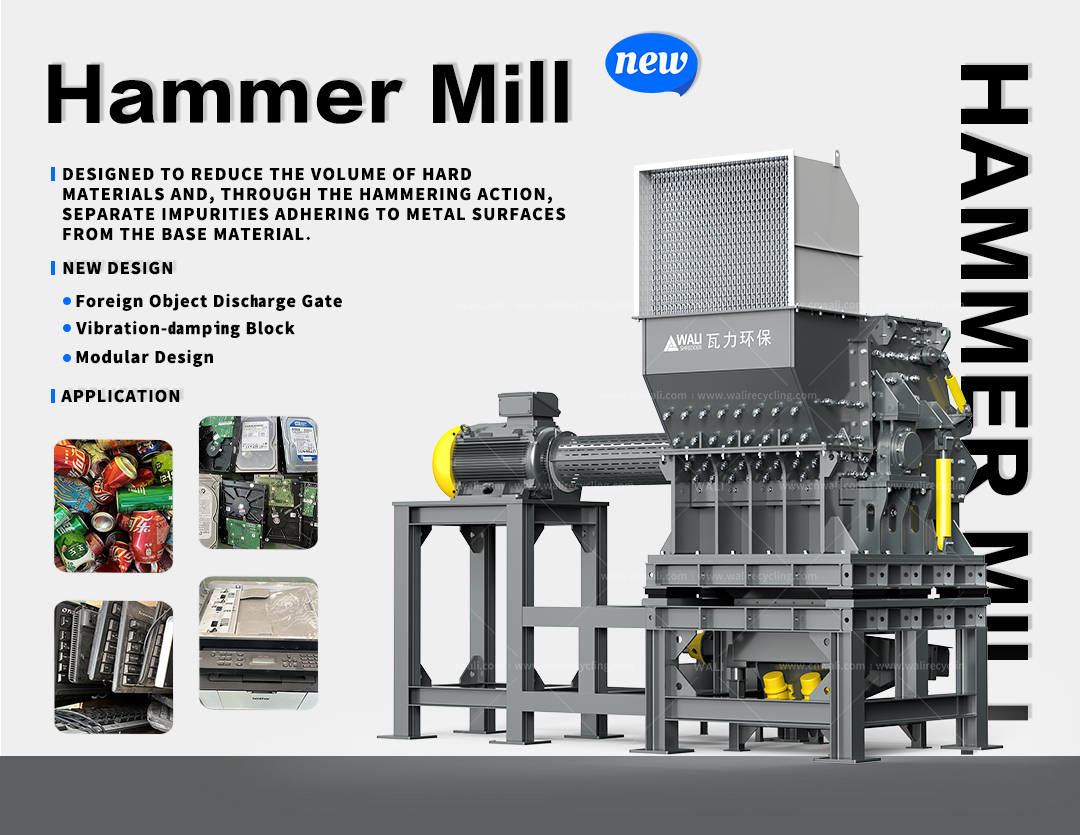
Every Improvement Arises from Real-World Operating Feedback
This product update stems from systematic responses to three core pain points identified in actual equipment operation: foreign object jamming, vibration-induced wear, and maintenance complexity.
◊The foreign object discharge door, combined with a non-stop discharge mechanism, allows unbreakable objects—such as iron blocks and metal pieces—to be quickly ejected while the equipment continues to operate. The machine does not need to be shut down, the production line does not need to be interrupted, and operators do not need to enter hazardous areas. True productivity depends on the duration of continuous operation, not on theoretical peak throughput.
◊The vibration-damping blocks absorb and dissipate the impact energy generated with each hammer strike. While impact cannot be eliminated, excessive vibration can be effectively suppressed. This improvement reduces fatigue damage to bearings and the main shaft, extends the service life of core components, lessens destructive impact on the equipment’s mounting foundation, and suppresses operating noise. The essence of durability lies in the continuous optimization of every stress-bearing detail.
◊Modular design addresses the issue of maintenance costs. Key components such as screens, hammers, and discharge doors are divided into independent functional modules with clear interfaces and straightforward assembly and disassembly logic. Daily inspections and wear-part replacements can be performed without the need for specialized engineers. The user’s time and labor costs are as valuable as the equipment itself.
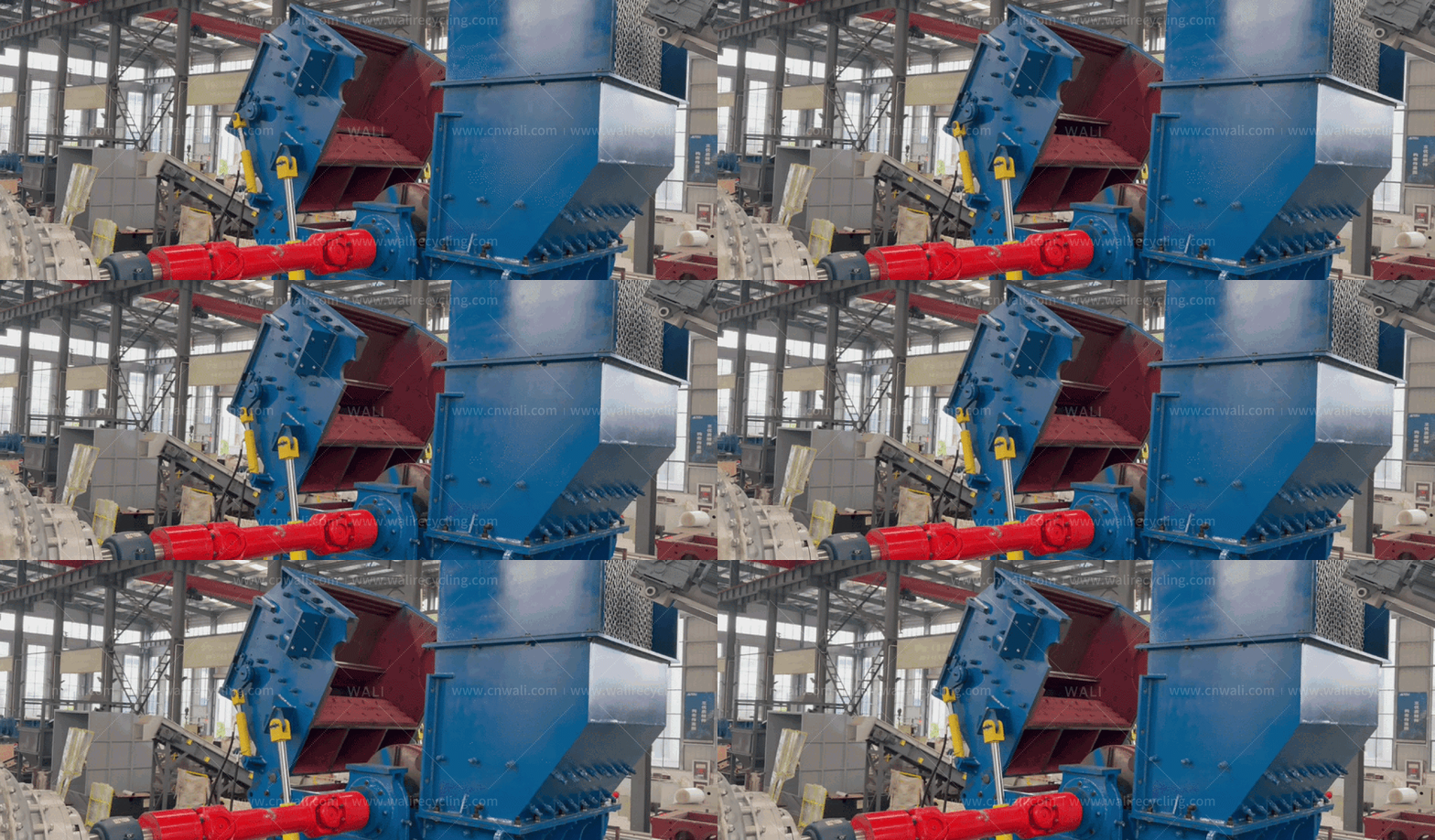
Quality Begins with Every Component
Adhering to our consistent high-quality standards, the hammer crusher is built for long-lasting durability and superior performance. From the rotor structure to the crushing housing, from weld joints to connection flanges, every link’s selected high-quality materials ensure that the crusher maintains structural integrity even when processing high-hardness scrap.
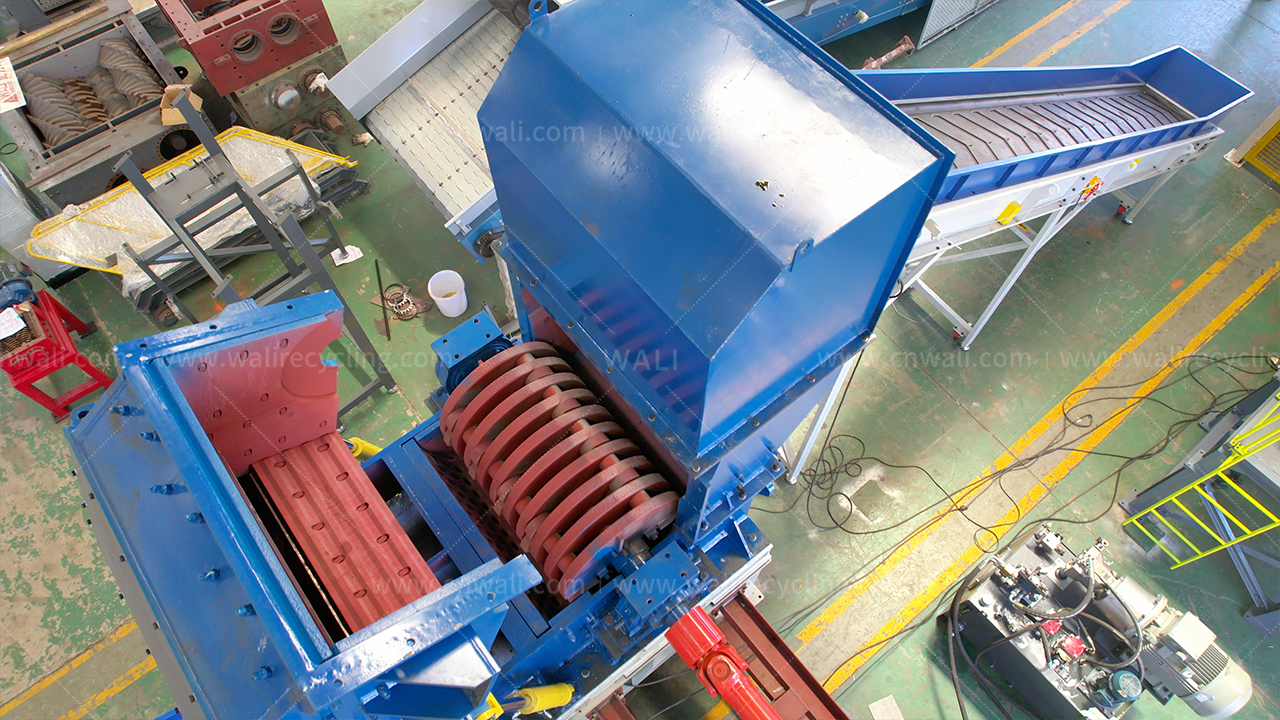
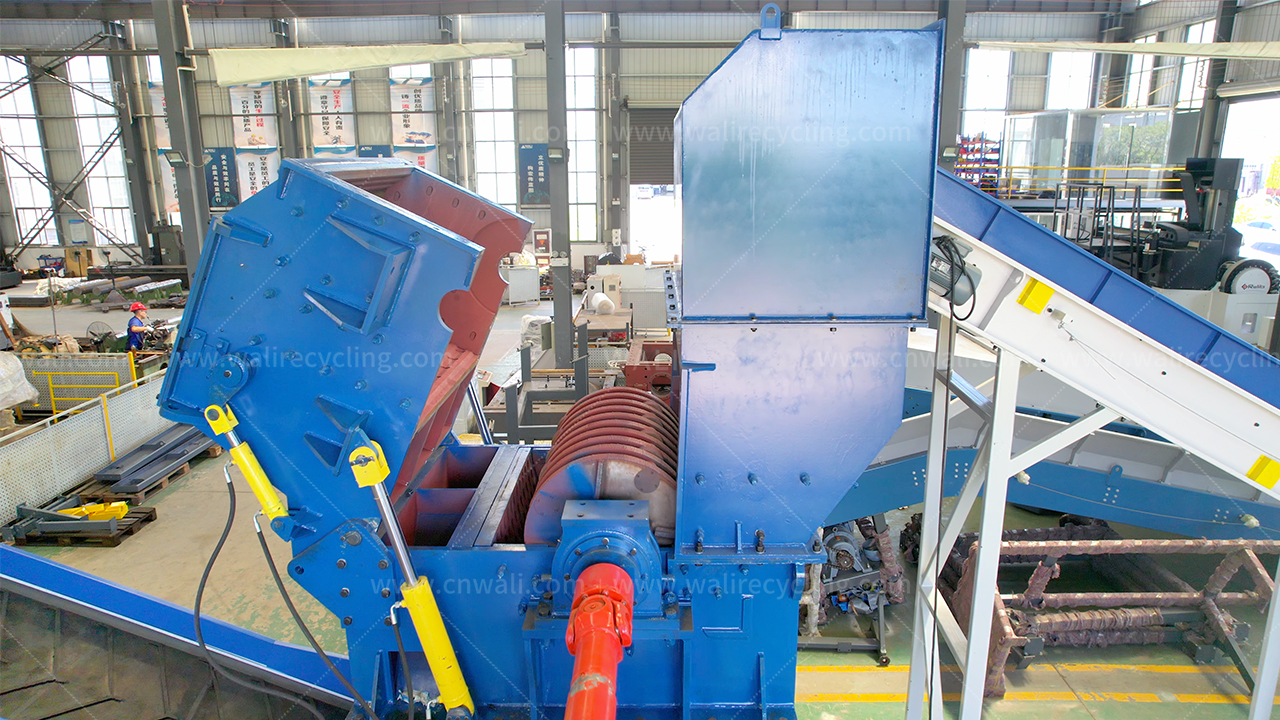
◊Wear is deliberately concentrated on easily replaceable components. Key working parts—such as blades, screens, and liners—are made of special steel alloys with excellent wear and corrosion resistance. The logic of this design is to confine inevitable wear to components that can be quickly replaced, thereby extending the service life of the machine’s core structure and reducing the customer’s total cost of ownership.
◊The rotor consists of a main shaft, discs, shaft pins, and hammers. Its structure is designed to efficiently absorb and distribute the mechanical stress generated during crushing. Hammer shapes and sizes can be customized according to material characteristics to ensure optimal impact effect and high crushing efficiency. This design not only reduces the risk of component breakage but also guarantees consistent and stable equipment performance.
◊A flywheel is installed at one end of the main shaft, and counterattack liners are arranged inside the crushing housing. Working in tandem, they ensure smoother rotor operation, effectively reduce impact loads on the electric motor, and guarantee the machine’s impact resistance under frequent high-impact conditions. The robust sealing design ensures safe and stable operation even in complex industrial environments involving dust, umidità, and high temperatures.
Innovation and Development
These measures reflect a consistent design philosophy centered on a clear goal: to provide highly reliable systems that are not only long-lasting but also create tangible value for customers’ investments over the long term.
All of this stems from a more fundamental capability: decades of persistent innovation, continuous learning, and a commitment to customer experience and market demands as the highest principles.
In this industry, standing still is dangerous. Material types are changing, waste streams are becoming increasingly complex, and customers’ requirements for production efficiency and operating costs rise year by year. The reason we can continuously introduce improvements like this upgrade that directly address pain points is that we never stop listening, observing, and reflecting.
Every abnormal operating condition reported by customers is recorded, analyzed, and incorporated into the next design cycle. Every instance of premature wear parts failure discovered during after-sales maintenance triggers a reassessment of materials or design. We don’t just manufacture equipment; we continuously learn how this industry evolves and translate that learning into value customers can perceive—fewer stoppages, longer service life, and simpler maintenance.
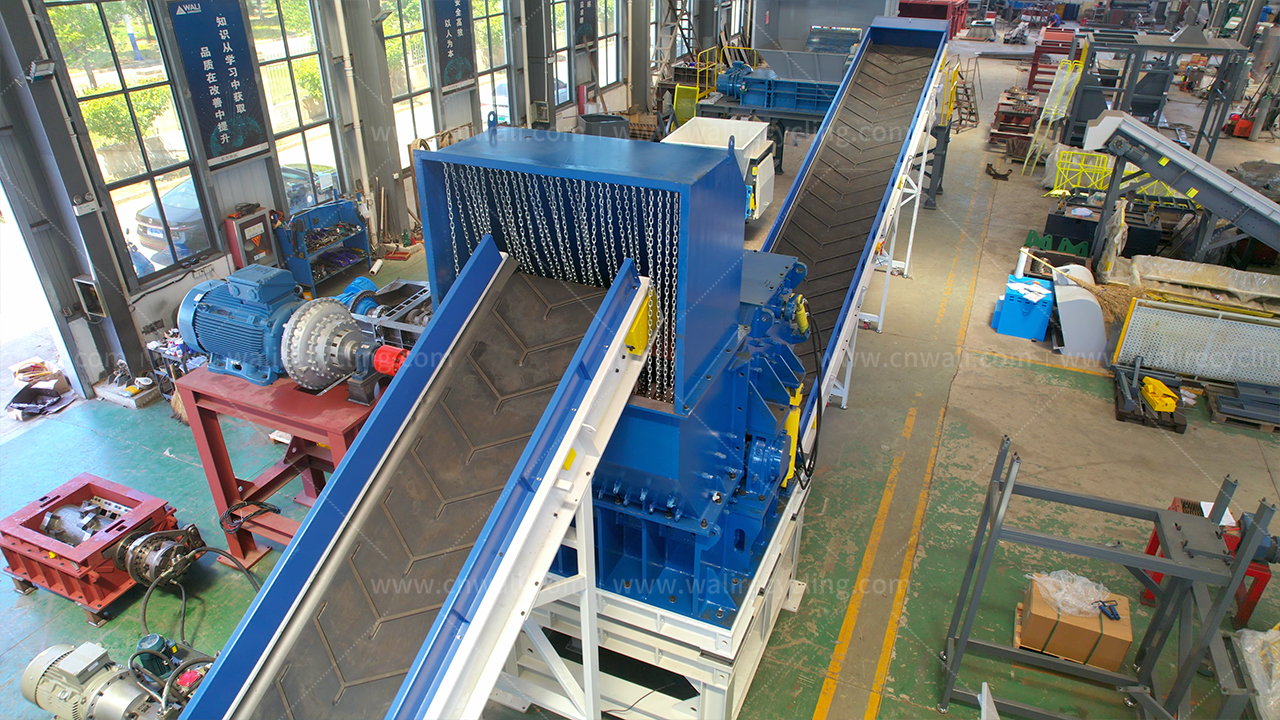
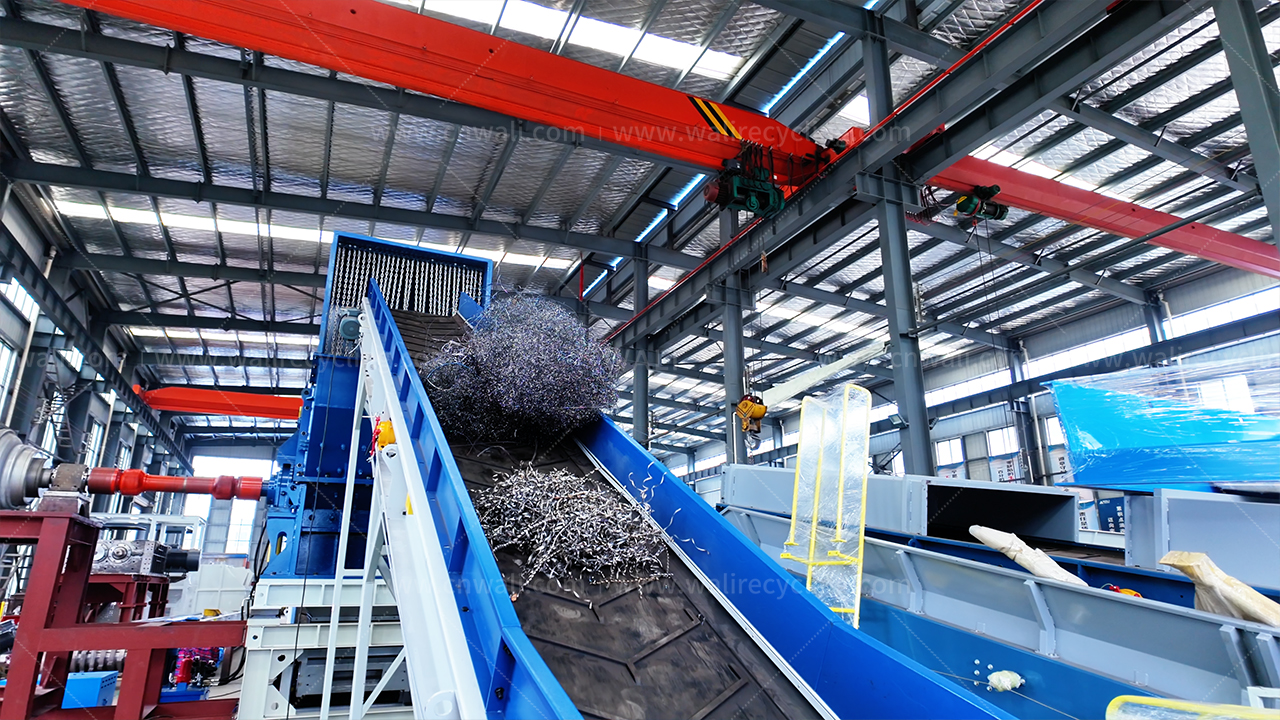
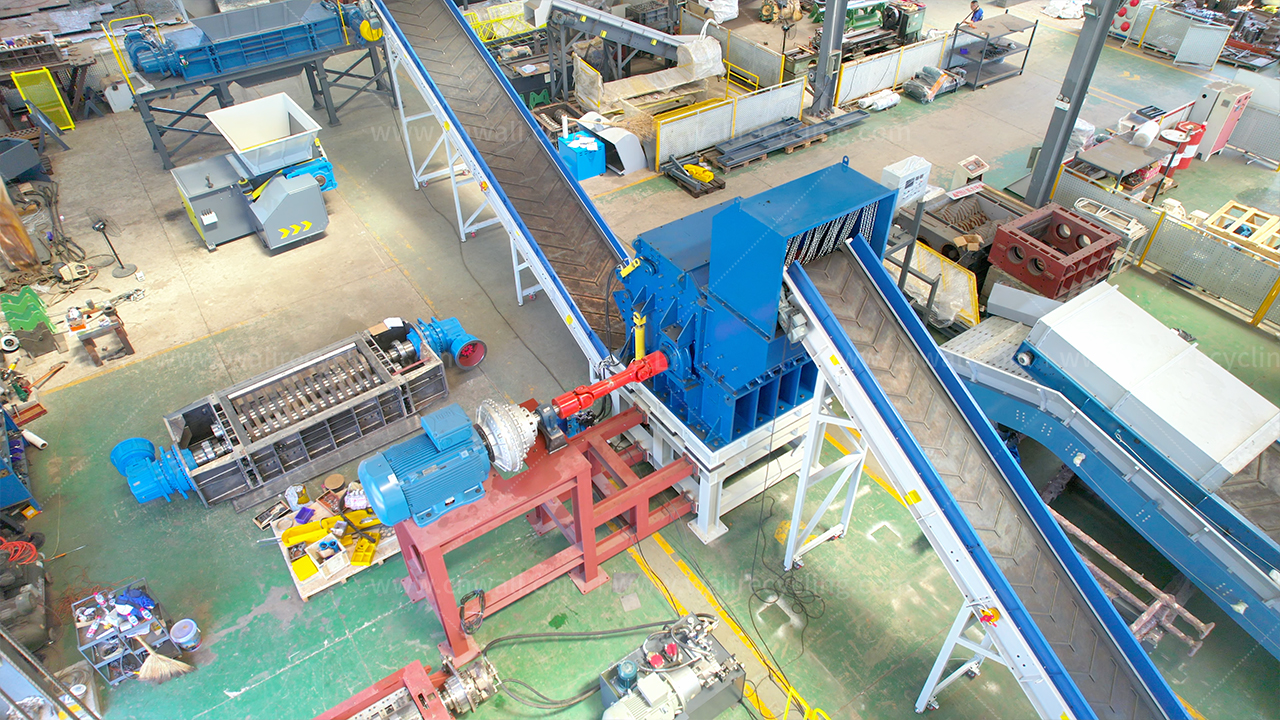
True value is never reflected in the numbers on a spec sheet but in the smoothness of equipment operation, the foresight of potential failures, and the trust customers gradually build over long periods of use. For decades, we have consistently adhered to this direction: quality as the foundation, innovation as the driver, and market demands as the guide. Ultimately, what we deliver to customers is not just a hammer crusher but a peace of mind that stands the test of time.
As a manufacturer deeply rooted in this field for decades, we know that product quality is reflected in the durability of every detail; production efficiency is reflected in the stability of every continuous operation; and a company’s true value is reflected in whether it is willing to continuously surpass its past self for the sake of customer experience.”
-END-